|
 The
Incas Called Cuzco "the Navel of the World" and Lake
Titicaca "the Womb of Mankind." The Lakeside
Populationof TodayConsider Themselves as the "Oldest
People in the World”. The Lake Covers Approximately 9000
km and Like Many Things in Bolivia it Takes Another
Highest Record ; it is the World's Highest Navigable
Lake (12,500 Feet) 3,820 Meters, its Depth was Recently
Measured at 457 Mt. Lake Titicaca has Long Been Known to
be not Only the Largest but Also the most Sacred in the
World. Near it, Many Cultures and Civilizations Have
Risen. The Tiawanaku Culture Began its Heyday Around the
Time of Christ and Lasted Over a Millennium Extending
far Into Puno and Northern Chile. Tiawanaku Ceremonial
Sites Were Constructed Along the Shores of Lake Titicaca,
Indicating That the Lake was Considered Sacred at Least
2,000 Years Ago. The Incas Believed They Originated From
Lake Titicaca and That Their Bearded, White Skinned/Deity,
Viracocha, Began his Acts of Creation on This Island.
Clearly, Lake Titicaca Played a Dominant Role in Andean
Beliefs For Over Two Millennia. The Best Known of Lake
Titicaca Islands are Taquile and Uros, the Floating
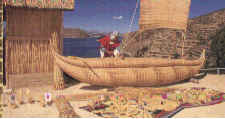
Islands Made of Reed Called Totora. The Islands of the
Sun and of the Moon are on the Bolivian Side. Reeds
(Totora) Grow in the Low Waters of the Lake and They
Have Always Been of Multiple Uses for the Natives. The
People From the Titicaca Region Weave this Plant Very
Well to Make Rafts Which Seem to be Made of Woven Glob
Fiber; They Cut Swiftly Through the Waters of the Great
Lake. Birds Nest Among the Reeds, Providing Eggs for
Human Consumption. The Matted Plants Serve as a
Foundation to Build Reed Houses. The Most Important
Geographical Feature of theTiticaca is the Copacabana
Peninsula, Which Contains Remains of Cultures Dating
Back to Long Before the Spanish Influence in South
America . The
Incas Called Cuzco "the Navel of the World" and Lake
Titicaca "the Womb of Mankind." The Lakeside
Populationof TodayConsider Themselves as the "Oldest
People in the World”. The Lake Covers Approximately 9000
km and Like Many Things in Bolivia it Takes Another
Highest Record ; it is the World's Highest Navigable
Lake (12,500 Feet) 3,820 Meters, its Depth was Recently
Measured at 457 Mt. Lake Titicaca has Long Been Known to
be not Only the Largest but Also the most Sacred in the
World. Near it, Many Cultures and Civilizations Have
Risen. The Tiawanaku Culture Began its Heyday Around the
Time of Christ and Lasted Over a Millennium Extending
far Into Puno and Northern Chile. Tiawanaku Ceremonial
Sites Were Constructed Along the Shores of Lake Titicaca,
Indicating That the Lake was Considered Sacred at Least
2,000 Years Ago. The Incas Believed They Originated From
Lake Titicaca and That Their Bearded, White Skinned/Deity,
Viracocha, Began his Acts of Creation on This Island.
Clearly, Lake Titicaca Played a Dominant Role in Andean
Beliefs For Over Two Millennia. The Best Known of Lake
Titicaca Islands are Taquile and Uros, the Floating
Islands Made of Reed Called Totora. The Islands of the
Sun and of the Moon are on the Bolivian Side. Reeds
(Totora) Grow in the Low Waters of the Lake and They
Have Always Been of Multiple Uses for the Natives. The
People From the Titicaca Region Weave this Plant Very
Well to Make Rafts Which Seem to be Made of Woven Glob
Fiber; They Cut Swiftly Through the Waters of the Great
Lake. Birds Nest Among the Reeds, Providing Eggs for
Human Consumption. The Matted Plants Serve as a
Foundation to Build Reed Houses. The Most Important
Geographical Feature of theTiticaca is the Copacabana
Peninsula, Which Contains Remains of Cultures Dating
Back to Long Before the Spanish Influence in South
America . |