|
DAY 1: PUERTO MALDONADO TO HEATH
RIVER WILDLIFE CENTER
 Our
staff welcome you at Puerto Maldonado airport and we
drive through this bustling Upper Amazon Basin city to
the Tambopata River boat dock. Here we board a powerful
motorized dugout canoe and set off to the nearby
confluence of the mighty Madre de Dios River, where we
head downstream for approximately three hours to the
Peru-Bolivia border at the mouth of the remote Heath
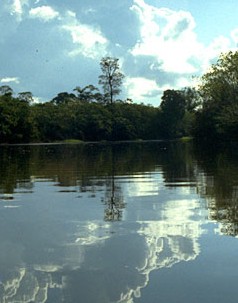
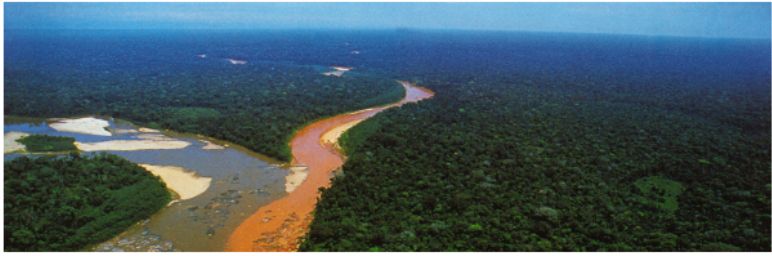
River. Even beneath the vast sky of this major Amazon
tributary we glimpse the diversity of the riverine
environment, with its forest-capped red-earth cliffs,
alternating with low banks thick with Cecropia trees and
giant grasses. Now, after brief frontier-crossing
formalities, we motor for about two more hours up
narrower and wilder waters, suddenly enjoying the
intimacy of mysterious forest looming close on either
side. Occasional views of native villages and children
splashing by the banks, are interspersed with long,
quiet stretches where we may spot herons, hawks,
cormorants, Orinoco Geese, and perhaps a family of
Capybaras -- the world’s largest rodent, weighing up to
55kg./120lb, and looking like an enormous Guinea Pig. We
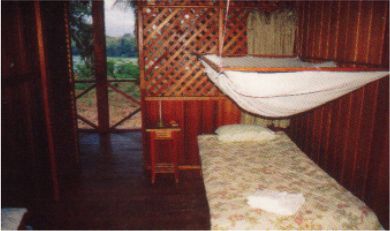
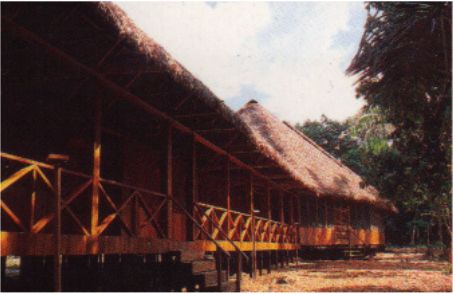
reach our simple, charming and comfortable quarters at
the Heath River Wildlife Center in time for dinner. (Box
lunch, D) Our
staff welcome you at Puerto Maldonado airport and we
drive through this bustling Upper Amazon Basin city to
the Tambopata River boat dock. Here we board a powerful
motorized dugout canoe and set off to the nearby
confluence of the mighty Madre de Dios River, where we
head downstream for approximately three hours to the
Peru-Bolivia border at the mouth of the remote Heath
River. Even beneath the vast sky of this major Amazon
tributary we glimpse the diversity of the riverine
environment, with its forest-capped red-earth cliffs,
alternating with low banks thick with Cecropia trees and
giant grasses. Now, after brief frontier-crossing
formalities, we motor for about two more hours up
narrower and wilder waters, suddenly enjoying the
intimacy of mysterious forest looming close on either
side. Occasional views of native villages and children
splashing by the banks, are interspersed with long,
quiet stretches where we may spot herons, hawks,
cormorants, Orinoco Geese, and perhaps a family of
Capybaras -- the world’s largest rodent, weighing up to
55kg./120lb, and looking like an enormous Guinea Pig. We
reach our simple, charming and comfortable quarters at
the Heath River Wildlife Center in time for dinner. (Box
lunch, D)
(Please note that the lodge is located on the Bolivian
shore of the Heath River, so passports are required to
clear Bolivian passport control.)
DAY 2: HEATH RIVER WILDLIFE CENTER
 Today
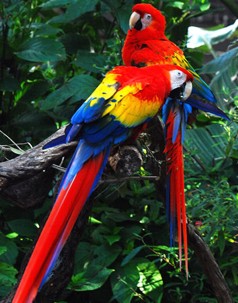
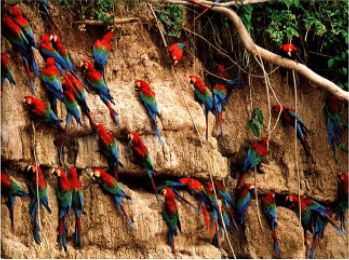
we make an early start to visit the lodge’s most
spectacular feature: the Heath River parrot and macaw
lick. Here these colorful birds gather to eat a type of
clay from the cliff-like river banks that neutralizes
certain toxins in their diet. They congregate early each
morning, sometimes by the hundreds, jostling and
squabbling over the best eating spots on the clay lick.
This noisy and unforgettable show can go on for two or
three hours, and may begin with up to five species of
parrot and two varieties of parakeet, followed by
Chestnut-fronted Macaws and their larger, more
boisterous cousins, the Red-and-green Macaws. This
extraordinary wildlife display occurs at only a handful
of sites in the Upper Amazon Basin, and nowhere else on
the planet. Today
we make an early start to visit the lodge’s most
spectacular feature: the Heath River parrot and macaw
lick. Here these colorful birds gather to eat a type of
clay from the cliff-like river banks that neutralizes
certain toxins in their diet. They congregate early each
morning, sometimes by the hundreds, jostling and
squabbling over the best eating spots on the clay lick.
This noisy and unforgettable show can go on for two or
three hours, and may begin with up to five species of
parrot and two varieties of parakeet, followed by
Chestnut-fronted Macaws and their larger, more
boisterous cousins, the Red-and-green Macaws. This
extraordinary wildlife display occurs at only a handful
of sites in the Upper Amazon Basin, and nowhere else on
the planet.
Our floating hide platform provides comfort and complete
concealment, so that we can eat a full breakfast here
during pauses in the bankside spectacle. For ultra-close-up
viewing, our guides carry a tripod-mounted spotting
scope, which can also be used to get telephoto pictures
with even the simplest camera.
On our return we can land partway downriver and walk
back along a section of the lodge’s extensive network of
forest trails. We encounter numerous gigantic Brazil-nut,
kapok and fig trees, along with the scary strangler fig,
whose life strategy is as sinister as its name suggests.
Our guide will point out and explain the medicinal and
commercial uses of dozens of plants and trees, while we
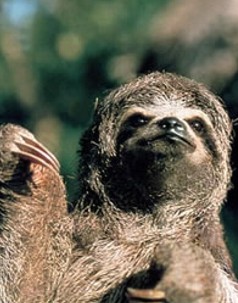
keep our eyes and ears open for birds, or one of the
eight species of monkeys found in this region. We might
come upon a small herd of White-lipped or Collared
peccary – two kinds of wild pig that are quite common in
this area. For purposes of territorial marking they
deploy a “stink gland” so potent that they are often
smelled long before they are seen.
After lunch we typically hike or bicycle along a major
trail to a point where the forest abruptly gives way to
the spacious plains of the Pampas del Heath, part of
Bolivia’s Madidi National Park. This unique environment
-- the result of very poor soils, plus an extreme
seasonal cycle of dryness and flooding -- is the largest
remaining undisturbed tropical savannah in the Amazon,
and is home to rare endemic birds and mammals, such as
the Swallow-tailed Hummingbird and the highly endangered
Maned Wolf. Shortly beyond the edge of the forest we can
climb a raised platform that allows us a grand view of
this vast expanse of grassland and shrub, studded with
palm trees.
We can continue another hour or so to a swampy area
thick with Mauritia flexuosa palm trees, whose oil-rich
palm nuts and hollowed-out dead palms provide vitally
important food and shelter for nesting pairs of Red-bellied
and increasingly rare Blue-and-yellow macaws. We aim to
arrive toward dusk, when the macaws are returning from
their day’s foraging to congregate in this very special
breeding site.
We return to the lodge by night, using our flashlights,
and perhaps pausing here and there in total darkness, to
listen to the ever-changing orchestra of animals, frogs
and insects, and to experience the magic of the
night-time rainforest. We may come upon such bizarre
nocturnal creatures as camouflaged frogs disguised as
dead leaves, toads the size of rabbits, hairy tarantulas
peering out of their dirt holes, night monkeys lurking
among the tree branches, and a seemingly unpredictable
array of other nightlife.
After dinner some guests may choose to visit one of our
mammal lick hides, in hopes of seeing a Lowland Tapir,
the rainforest’s largest mammal. Hardy adventurers can
choose to camp here with their guide, in order to
experience a full night in the heart of the rainforest
and increase their chances of a major wildlife sighting.
(B, L, D)
DAY 3: HEATH RIVER WILDLIFE CENTER
 Our
second full day at the lodge allows us to choose from a
wide range of activities available in this exceptionally
diverse tropical environment. Many people choose to make
a second visit to the macaw clay lick. Later we can take
a canoe tour around Cocha Moa, an oxbow lake that lies a
short way downstream from the lodge. Our
second full day at the lodge allows us to choose from a
wide range of activities available in this exceptionally
diverse tropical environment. Many people choose to make
a second visit to the macaw clay lick. Later we can take
a canoe tour around Cocha Moa, an oxbow lake that lies a
short way downstream from the lodge.
The reeds, fallen trees and forested shoreline of this
lake teem with birds and other wildlife. Red Howler
Monkeys may peer at us through the branches of the giant
trees above us, while herons lie in wait among the
fallen trees, cormorant-like Anhingas watch from the
forest branches, and an Osprey may circle overhead.
Flocks of brilliant Red-capped Cardinals gather on dead
branches, and a colorful, primitive bird, the Hoatzin,
hops its ungainly way along the swampy water’s edge.
In the afternoon we may travel an hour or so downriver
to visit the Ese’Eja native community of Sonene, where
we can meet these descendants of nomadic forest tribes,
and catch a glimpse of those traditional ways of life
that they manage to maintain in the modern world. We can
also purchase their handcrafts, made from a wide range
of seeds collected from the forest.
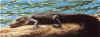
After dinner we can board our canoe once more, for an
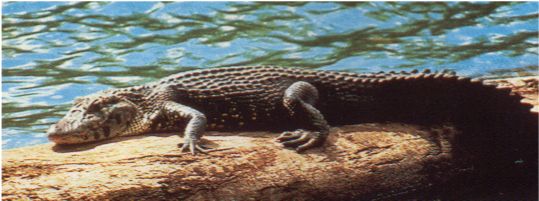
evening of spotting for caiman, the Amazonian cousin of
the alligator. This region is home to the endangered
black caiman, and we nearly always pick out a few with
our powerful spotlight as we patrol the river. (B, L, D)
DAY 4: HEATH RIVER WILDLIFE CENTER
 Today
we follow pathways new to us, and explore fresh areas
along the lodge’s extensive network of forest trails,
deepening our acquaintance with the forest and its ways,
and searching for birds, mammals, and other creatures we
may not yet have seen. Perhaps we will run across
peccary for the first time, or add two or three species
to our monkey list. Our guides will point out new
species of trees and plants, explaining their medicinal,
commercial or ritual uses. Towards the end of our walk
we will visit one of the lodge’s several mammal clay
licks, which may provide a surprise encounter with a
tapir, or a Red Brocket Deer. Today
we follow pathways new to us, and explore fresh areas
along the lodge’s extensive network of forest trails,
deepening our acquaintance with the forest and its ways,
and searching for birds, mammals, and other creatures we
may not yet have seen. Perhaps we will run across
peccary for the first time, or add two or three species
to our monkey list. Our guides will point out new
species of trees and plants, explaining their medicinal,
commercial or ritual uses. Towards the end of our walk
we will visit one of the lodge’s several mammal clay
licks, which may provide a surprise encounter with a
tapir, or a Red Brocket Deer.
After lunch we plunge deeper into the wilderness,
boating up the Heath River into areas that are
completely unpopulated, and seldom visited by anyone
except an occasional park ranger, and the indigenous
Ese’Eja river people. This journey is always an
adventure – especially in the dry season months of June
through October, when our crew may frequently have to
push the canoe across sandbanks and gravel shallows.
Wildlife spotting from the canoe is comfortable,
effortless and productive, as many birds and animals
patrol the river banks, and not infrequently swim across
the river. Along with countless bird species, we usually
spot families of Capybara, the giant three-toed relative
of the guinea pig, which can weighs up to 55kg./120 lbs.,
and is the world’s largest rodent. We are often even
more successful after we reach the upper limits of canoe
navigation, when we can turn the engine off for long
spells and float soundlessly downriver, catching the
forest wildlife unawares.
We return to the lodge for some leisure time before
dinner. Later we have the option of a night trail walk
in search of the numerous creatures, including frogs,
toads, owls, nighthawks, spiders and night monkeys, that
make the forest such a busy and different place during
the night. (B, L, D)
DAY 5: TRANSFER OUT
 We
leave at dawn for the return trip downstream. This is
peak hour for wildlife so we keep a sharp eye on the
riverbanks, often spotting families of Capybara, and
perhaps being rewarded with a rare jaguar sighting, or a
tapir swimming across the current. We reach the Madre de
Dios River, re-enter Peru, and set off upstream for
Puerto Maldonado, where we are transferred to the
airport for our flight to Cusco or Lima.(B) We
leave at dawn for the return trip downstream. This is
peak hour for wildlife so we keep a sharp eye on the
riverbanks, often spotting families of Capybara, and
perhaps being rewarded with a rare jaguar sighting, or a
tapir swimming across the current. We reach the Madre de
Dios River, re-enter Peru, and set off upstream for
Puerto Maldonado, where we are transferred to the
airport for our flight to Cusco or Lima.(B)
Please note that the program may vary slightly so as to
maximize your wildlife sightings, depending on the
reports of our researchers and experienced naturalist
guides based at the lodge.
END OF OUR SEVICES |