|
Unlike Those in Mesoamerica, the
Earliest Major Ruins in the Central Andean Area Date
From Before the Pre- Ceramic Period. In the Chicama
Valley of the Northern Peruvian Coast at Huaca Prieta,
Monumental Ceremonial Mounds were Built About 2500 BC.
Highly Skilled Cotton Weaving has Been Found at this
Site as Well as Gourds Carved with Stylized Geometric
Motifs. Another Pre-Ceramic Site on the Northern Coast
is Las Haldas, Where Perhaps the First True Pyramids and
Platform Temples in the Americas were Constructed of Mud
About 1800BC.
El Paraiso, or Chuquitanta, on the Central Peruvian
Coast, is the Region's Largest Excavated Pre-Ceramic
Site. Various Residential Complexes of Clay and Stone
were Built by Piling Rooms and Terraces onto One Another,
as in the Pueblo Towns in the Southwestern United States.
Another Important Pre-Ceramic Site is Kotosh in the
Northern Highlands of Peru. At Kotosh, Terraced Temples
were Made of Fieldstone Set in Earth and Decorated with
Clay Reliefs of Crossed Hands. Pre-Classic Period had
Two Important Cultures Developed in Peru in the Pre-Classic
Period, Chavín de Huántar and Paracas.
Chavín
Between 1200 and 200BC, in the Northern Peruvian
Highland Ceremonial Center of Chavín de Huántar, a
Civilization Flourished That in Many Ways Paralleled the
Contemporary Olmec Civilization of Mesoamerica. Both
were Major Early Civilizations in Their Archaeological
Areas, and Both Used Feline Images in Their Sacred
Iconography. It Appears That Chavín Artistic Influence
was Spread not by Military But by Religious and
Intellectual Efforts. From Ecuador to Southern Coastal
Peru, Evidence Remains of Chavín Artistic and
Iconographic Influence.
Chavín de Huántar is Composed of a Series of Platforms
and Temples with Corbel Vaults in Some of the Corridors.
The Finest Stone Sculpture in the Central Andean Area is
Found at Chavín de Huántar or at Chavín-Related Sites
Such as Cerro Blanco and Cerro Sechin. Unlike the Olmec
and Other Mesoamericans, However, the Chavín and Later
Peruvian Civilizations Created Very Little Freestanding
Stone Sculpture or Even Clay Figurines. Chavín Shallow-Relief
Carving Achieved its Expressive Height in the Stylized
Rectilinear Design of the Stela Called the Raimondi
Stone.
Probably Originated in Northern Peru, the Stirrup-Spout
Vessel—a Closed Pot Having a Hollow U-Shaped Handle
Surmounted by a Tubular Spout—was the Most
Characteristic Chavín Ceramic Shape. Resembling Olmec
Ceramics, Fine Chavín Pottery was Produced at Outposts
Rather Than at the Principal Ceremonial Center. In
Northern Peruvian Coastal Valleys at Cupisnique,
Chongoyape, and Tembladera, Highly Accomplished Effigy
Pots were Made With Abstract and Realistic Designs.
Metalworking Developed and the Chavín Excelled at Making
Hammered Gold, or Repoussé, Body Ornaments.
Characteristic of the Metalwork of the Chavín are Cutout
Decorative Plaques That wereAttached to Garments, and
High Cylindrical Crowns with mythological Reliefs, Which
were Worn by the Chavín Nobility.
Paracas
Another Civilization Developed From About 1100 to 200 BC
at Paracas on the Southern Peruvian Coast. Because of
the Area's Extreme Aridity, Paracas Textiles Have Been
Perfectly Preserved. Buried in Desert Tombs, Mummies
were Bundled With Layers of Cloth That was Woven or
Painted With Complex Designs or Elaborately Embroidered.
Effigy Pots were Also Found in the Paracas Necropolis.
Many of These Show Distinct Chavín Influence, Especially
in the Use of Feline-Cult Iconography. Peruvian Southern
Coastal Art has Always Been More Influenced by
Schematized Textile Designs, Rather Than by the Clay and
Metal Sculpture that Promoted the Realism of Northern
Peruvian Art. The Decoration of Paracas Ceramics,
Therefore, was Highly Stylized, Frequently Incised, and
Brightly Polychrome. The Vessels Themselves were Often
Double Spouted and Round Bottomed, Rather Than Stirrup
Spouted and flat Based Like Northern Coastal Pots.
Classic Period
Dominating the Classic Period were the Moche and Nazca
Cultures and the Later Tiahuanacu and Related Huari
Cultures.
Moche
Between About 200BC and AD 700 a Militaristic Society
Flourished on the Northern Peruvian Coast. Formerly
Named After its Language, Mochica, This Civilization is
Now Referred to by the Name of its Major Ceremonial
Administrative Site, Moche.
Centered on Two Large Terraced Platform Pyramids of Sun-Baked
Brick, Moche is One of Peru's Most Monumental Sites.
Although a Warrior Society, the Moche Displayed None of
the Spartan Taste or Disdain for Luxury That
Characterized the Mesoamerican Toltec. Moche Tombs were
Filled With Some of the Most Proficient Pottery and
Metalwork of the Central Andean Area. Moche Ceramics,
the Best Known of Ancient Peruvian Artifacts, are Among
the Finest Pre-Columbian Accomplishments of Sculptural
Realism and Narrative Drawing. So-Called Portrait-Head
Effigy Pots are Especially Notable for Realistically
Depicting Human Features and Portraying Emotion. On
Other Moche Pottery the Curved Vessel Walls are
Decorated with Dynamic Scenes Drawn With Delicate
Stylized Lines and Showing This People's Religious and
Military Life. The Moche also Produced More Erotic
Pottery Than Any Other Pre-Columbian Civilization. These
Artifacts are Now Interpreted as Having Ceremonial
Rather Than Pornographic Meaning.
Moche Metalwork was More Ornate and Technologically
Advanced Than That of Earlier Civilizations. Body
Ornaments of Gold, Silver, Copper, and Alloys were
Frequently Inlaid With Turquoise and LapisLazuli.
Geometric Patterns and Mythological Motifs, Especially
the Feline Deity, wasUsed.
Nazca
Nazca of Peru's Southern Coastal Region was Roughly
Contemporary With the Moche. Like Their Paracas
Predecessors, Nazca Produced Little Architecture and
Excelled at Making Textiles and Pottery With Colorful
Stylized Designs That Contrast Sharply to the Realism
and Restrained Color of Northern Peruvian Ceramics.
Nazca Pottery is as Exuberantly Polychrome as it is
Boldly Designed and Drawn. Paracas Incising was no
Longer Used, and Color was Applied Before (instead of
after) Firing. Although Both the Moche and the Nazca
Made Pots That Combined Modeled Elements and Drawings,
the Moche Preferred Sculptural Pottery, and the Nazca,
Painted.
Among the Most Enigmatic of all Pre-Columbian Remains
are the Nazca Lines. These are Drawings in the Earth of
Geometric Shapes, Animals, Birds, and Fish That Can be
Fully Recognized Only From the Air.Used Frequently in
Ceremonies the Images Recall Those Painted on Nazca
Pottery. They were Made by Removing Dark Upper-Surface
Stones to Reveal a Lighter Substratum.
Tiahuanacu
Tiahuanacu is a Bolivian Site in the Southern Central
Andean Highlands near Lake Titicaca. Although Tiahuanacu
was Settled as Early as About 200 BC, it was Between
About 200 AD and 600 That This Urban Complex Became the
Center of Another Major Classic Period Civilization.
In Tiahuanacu Art and Architecture the Emphasis is on
Austerity, Control, and Permanence. Decorative Motifs
and Religious Imagery are Rigidly Stylized. Both
Buildings and Sculpture are Characterized by a
Monumental Effect and Monolithic Appearance. The Gateway
of the Sun at Tiahuanacu is Cut From a Single Stone and
Ornamented With Finely Executed Relief Decoration; only
3.7 M (12 Ft.) High, it Appears More Monumental Because
of its Design. Scattered Throughout the Tiahuanacu Area
is Pillarlike Monolithic Statues That Reach Heights of
More Than 6 M (More Than 20 Ft.) and are Decorated with
Low-Relief Detailing. The Tiahuanacu Culture was One of
the Few in the Central Andean Area Committed to an
Extensive Use of Stone for Architecture, Sculpture, and
Ceremonial Objects.
Huari
The Huari (Wari) Shared a Religion and Iconography With
the Tiahuanacu, but Were Socioeconomically Separate.
Between About 750 and 1000 the Huari Empire put an end
to Peruvian Regionalism, Thereby Preparing for the
Cultural Unification of the Inca Period.
Like the Moche, the Huari were a Warrior Society that
Appreciated Fine Artistry and Design. Coastal Huari
Cultures (Formerly Referred to as Coastal Tiahuanacu)
Produced Textiles of the Highest Quality. Many of the
Patterns, Especially for Ponchos, were Abstractions of
Motifs Painted on Tiahuanacu Pottery. Although Less
Refined Than Tiahuanacu Ceramics, Huari Pottery Stressed
Solid Construction, Bold Design, and a Rich Use of
Polychrome.
Post-Classic Period The Inca were Preeminent During the
Post-Classic Period, Rivaled Only by the Chimu.
Chimu
Northern Peru was Dominated by the Chimu From About 1000
Until 1470. Their Imperial Capital of Chan Chan was
Constructed of Large Walled Adobe Compounds Reflecting
Those of Earlier Huari Settlements. The Largest Andean
Urban Site and a True City, Chan Chan Consists of Ten
Major Quadrangles, Each Containing Small Pyramids,
Residences, Markets, Workshops, Reservoirs, Storehouses,
Gardens, and Cemeteries. The Buildings are Decorated
with Geometrically Patterned Mosaics of Adobe Bricks or
Bas-Reliefs, Molded in Clay Plaster, of Stylized Animals,
Birds, and Mythological Figures.
Although Chan Chan was not Fortified, the Chimu Defended
Their Empire by Building Fortresses on the Frontiers.
Paramonga, Which Defended the Southern Border, is
Considered a Masterpiece of Military Engineering, as is
the Fortress of Saccasihuamán Above Cusco.
Chimu Pottery was Primarily Mass-Produced Through the
Use of Molds. Its Characteristic Black Color was
Achieved Through Almost Smothering the Flame,
Drastically Reducing the Oxygen in the Kiln, During
Firing. Decoration was Usually Molded Relief, and the
Surface was Polished After Firing to Give the Pot a
Silver like Sheen.
Metalworkers also Mass-Produced Objects by Using Molds.
Compared with Chimu Pottery, However, the Metalwork is
More Distinctive in Design and Individual in Artistic
Execution. Textiles were Made With the Same Quality and
Quantity as Other Chimu Arts. The Featherwork was
Especially Outstanding, and Their Feathered Ponchos were
Among the Most Luxurious Garments Made in the Post-Classic
Period.
Inca
The Inca, Who Called Themselves Tawantinsuyu, Ruled From
Cusco an Empire Extending Between Ecuador and Chile. A
Highland Warrior People, the Inca Preferred an Aesthetic
That was Formally Simple, Decoratively Sparse, and
Functional. Because the Inca were the Native Americans
That the Spanish Conquered, Their Culture is the Central
Andean Area Civilization of Which Most is known; However,
as Happened with the Treasures of Their Mesoamerican
Contemporaries, the Aztecs, Many Inca Artifacts were
Destroyed by the Spanish, Out of Greed for Gold and
Silver or Out of Christian Militancy.
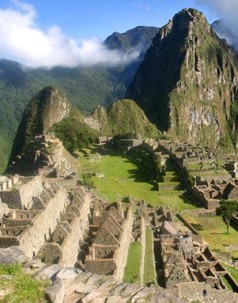
Highland Inca Cities Such as Machu Picchu was Carefully
Planned to Harmonize With the Landscape, Both Through
the Use of Indigenous Materials and Through the
Architectural Repetition of Surrounding Natural Forms.
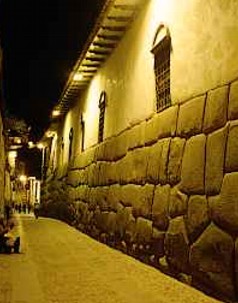
Structurally Among the Most Accomplished in the Pre-Columbian
Period, Inca Buildings were Constructed Carefully Shaped,
Precisely Fitted Stone Masonry That was Left Undecorated.
Trapezoidal Doors and Windows were Characteristic.
The Inca Produced Neither Large Scale Freestanding
Statues nor Architectural Sculpture. Metal Figurines and
Small Stone Ceremonial Bowls in the Shape of Llamas and
Alpacas are Among the Finest Examples of Their Sculpture.
Inca Pottery, Like That of the Chimu, was Mass-Produced,
but it was Less Distinguished. The Most Characteristic
Shape was That of the Arybalos, a Polychromed Container
for Carrying Liquids. In both Textiles and Metalwork,
the Inca Continued the Central Andean Tradition of High-Quality
Design and Execution.
|